
Understanding Parkinson’s disease

What is Parkinson’s disease?
Parkinson’s disease (PD) is a movement disorder of the nervous system. It is a condition that affects nerve cells in a specific part of the brain called the substantia nigra.
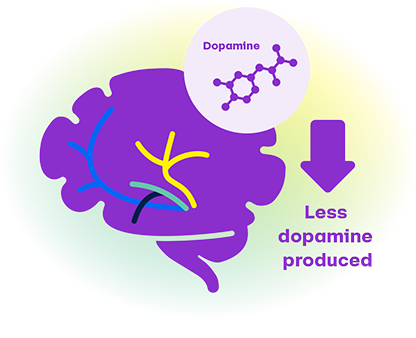
These nerve cells are responsible for producing dopamine, which plays a vital role for smooth, controlled body movements. As these nerve cells weaken, become damaged, or die, this leads to less dopamine being produced causing symptoms of PD to appear.
What are the symptoms of PD?
Symptoms of PD generally develop slowly over time and may be different for everyone. The most common PD symptoms are movement-related, called motor symptoms.
These may include:

Tremor

Stiffness

Slow movement

Freezing
Other motor symptoms not listed here may also occur in some people. Remember, PD affects everyone differently and can lead to a range of symptoms.
People with PD may also experience non-motor symptoms (not related to movement), such as:
- Depression
- Anxiety
- Apathy (lack of emotion)
- Constipation
- Sleep disorders
- Loss of sense of smell
- Cognitive impairments
- Depression
- Anxiety
- Apathy (lack of emotion)
- Constipation
- Sleep disorders
- Loss of sense of smell
- Cognitive impairments

It’s important to recognise that PD can have an impact on your quality of life. Let your care team know about any symptoms you’re experiencing – they are here to help.
What is ON/OFF time in PD?
Your prescribing specialist or care team may refer to your medication and management of PD symptoms using the terms ON and OFF. ON time is when your PD medication is working well and PD symptoms are controlled at their best, while OFF time is when PD medication is no longer working well and symptoms return.

What causes PD?
The exact cause of PD is unknown. The scientific community believes that a combination of genetic and environmental factors may play a role. Some contributing factors may include ageing, genetic changes, exposure to toxins, certain medicines and infection.

If you have any questions about your condition or treatment, speak to your prescribing specialist. They are best placed to provide medical advice based on your situation.

For more information and support on Parkinson’s disease, visit the Resources page.
AU-ABBV-230291. AC-004199-01. July 2025.